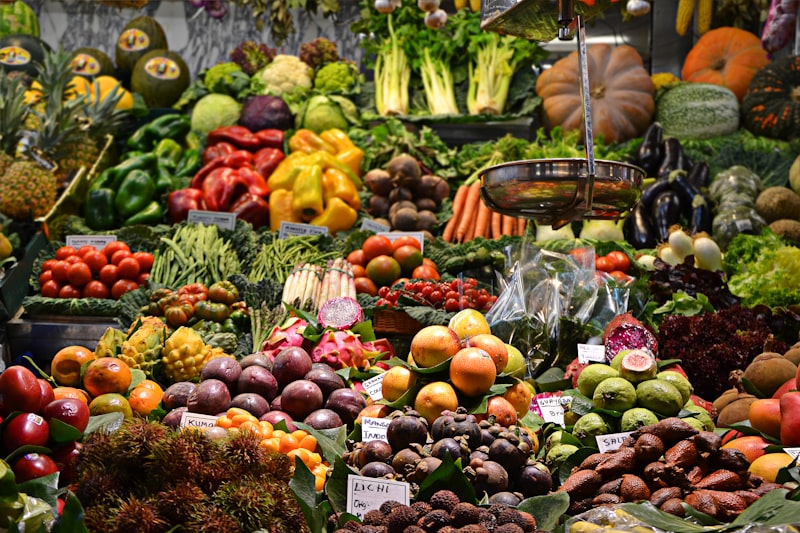
Resale Certificates for Farmers Market Vendors: Buy Inventory Tax-Free
Selling at farmers markets, craft fairs, and flea markets is a proven way to build a small business. But many vendors overlook one of the most basic cost-saving tools available: a resale certificate. If you buy supplies, ingredients, or finished goods to sell at your booth, you should not be paying sales tax on those purchases.
A resale certificate lets you purchase inventory and raw materials tax-free. For a vendor spending $1,000 per month on supplies in a state with 7% sales tax, that is $840 per year in savings. Over five years, that is $4,200.
Do Farmers Market Vendors Need a Resale Certificate?
Yes, in most cases. If you are selling taxable goods at a farmers market, craft fair, or flea market, you need:
- A sales tax permit (or seller's permit) from your state, which authorizes you to collect sales tax.
- A resale certificate (often the same form or closely related), which allows you to buy inventory and materials for resale without paying sales tax.
Some vendors assume that because they are small or sell only occasionally, they are exempt. That is generally not the case. If you are selling taxable products to the public, most states require you to be registered, regardless of volume.
Exceptions for Certain Sellers
Some categories may be partially or fully exempt from sales tax:
- Farmers selling their own unprocessed agricultural products (fresh fruits, vegetables, eggs, raw honey) are exempt from sales tax in many states. The produce itself is not taxable, and these sellers may not need a sales tax permit.
- Nonprofit organizations holding occasional fundraising sales may be exempt in some states.
- Casual or occasional sellers may be exempt in states that have a casual sale exemption (limited to a small number of sales per year).
If your products fall outside these narrow exceptions, you need to register.
What You Can Buy Tax-Free
Craft Fair and Handmade Goods Vendors
If you make products to sell (candles, soaps, pottery, jewelry, woodworking, textiles), the raw materials that go into your products qualify for the resale exemption.
| Material | Tax-Exempt? |
|---|---|
| Wax, wicks, and fragrance oils (candle makers) | Yes |
| Soap base, essential oils, molds (soap makers) | Yes |
| Clay, glazes, kiln supplies (potters) | Yes (materials that become part of the product) |
| Beads, wire, findings (jewelry makers) | Yes |
| Lumber, stains, finishes (woodworkers) | Yes |
| Fabric, thread, batting (textile artists) | Yes |
| Packaging (bags, boxes, labels) transferred to buyer | Yes |
| Display tables and fixtures | No (business equipment) |
| Canopy/tent for your booth | No (business equipment) |
| Tools (pliers, scissors, saws) | No (business equipment) |
| Booth rental fees | No (service, not resale item) |
The general rule: if the material physically becomes part of the product you sell, it qualifies. If it is a tool, display, or business expense, it does not.
Food Vendors
Food vendors at farmers markets have additional considerations because food taxation rules vary by state.
Prepared food (hot meals, baked goods, ready-to-eat items) is taxable in most states. Ingredients for those products qualify for the resale exemption.
Unprepared food (raw produce, packaged dry goods, jams and preserves in some states) may be exempt from sales tax entirely at the retail level. You still qualify for the resale exemption on your ingredients and packaging.
| Purchase | Tax-Exempt? |
|---|---|
| Flour, sugar, butter, eggs (for baked goods) | Yes |
| Fruits for jam and preserves | Yes |
| Spice blends for packaged seasonings | Yes |
| Jars, lids, labels (transferred to buyer) | Yes |
| Commercial kitchen rental | No |
| Food handler's permit | No |
| Prep equipment (mixers, ovens) | No |
Resellers and Flea Market Vendors
If you buy finished goods to resell (vintage clothing, collectibles, household items, liquidation merchandise), every item you buy for resale qualifies for the exemption.
| Purchase | Tax-Exempt? |
|---|---|
| Wholesale merchandise for resale | Yes |
| Liquidation pallets | Yes |
| Vintage clothing from thrift stores | Yes (if buying for resale) |
| Collectibles from other dealers | Yes |
| Packaging and bags for customers | Yes |
For more on buying liquidation inventory, see our liquidation pallets guide.
Temporary Seller Permits and Market Registration
Do You Need a Separate Permit for Each Market?
In most states, your regular sales tax permit covers all locations where you sell within the state. You do not need a separate permit for each farmers market or craft fair. However, you should keep records of where you sell, because the tax rate may vary based on the location of each event.
Temporary or Special Event Permits
Some states offer temporary seller permits for businesses that sell at only a few events per year. These are sometimes called:
- Temporary sales tax license
- Special event permit
- Itinerant vendor permit
These permits are typically valid for a specific event or a limited time period (30 to 90 days). If you sell regularly (more than a few events per year), you need a standard sales tax permit instead.
Market Organizer Requirements
Many farmers market organizers and craft fair promoters require vendors to show proof of a sales tax permit before they can set up a booth. Some markets also require:
- A copy of your resale certificate
- Proof of business insurance
- A business license from your city or county
- Food handler certification (for food vendors)
Having your documentation ready speeds up the vendor application process.
Collecting Sales Tax at Events
Determining the Correct Rate
When you sell at a farmers market or craft fair, you collect sales tax based on the location of the event, not your home address (in states that use destination-based sourcing, which is most states).
This means if you sell at markets in multiple counties or cities, you may need to collect different rates at different events. Keep a list of the correct combined rate for each venue.
Practical Tips for Tax Collection
- Use a point-of-sale app (Square, Clover Go, or similar) that automatically applies the correct tax rate based on your location.
- Post your prices as tax-inclusive or tax-exclusive, but be consistent. Most vendors find it easier to price items at round numbers with tax included, then back-calculate the tax for reporting.
- Keep a daily sales log for each event: date, location, total sales, tax collected.
- Issue receipts whenever possible, especially for larger purchases.
States With No Sales Tax
If you sell exclusively in Alaska, Delaware, Montana, New Hampshire, or Oregon, there is no state sales tax to collect. Some Alaska municipalities do impose local sales taxes, so check the specific location.
Multi-State Selling
If you travel to craft fairs and markets in multiple states, you may need to register in each state where you sell. Most states require any business making sales within the state to have a sales tax permit, even if only for a single event.
Some states offer reciprocity or simplified registration for temporary sellers. Check each state's requirements before you go.
For more on multi-state compliance, see our multi-state resale certificate guide.
Common Mistakes Market Vendors Make
Not Registering at All
The most common mistake. Many small vendors assume they are too small to need a sales tax permit. In most states, there is no minimum sales threshold for registration. If you make taxable sales, you need a permit.
Buying Supplies Without a Resale Certificate
If you are buying craft supplies at a retail store and paying sales tax, you are overpaying. Provide your resale certificate to suppliers (including retail craft stores like Michaels or Joann Fabrics) to buy materials tax-free.
Not Tracking Sales by Location
If you sell at events in multiple jurisdictions, you need to track sales by location to report the correct tax amount to each taxing authority. Failing to do this creates problems at filing time.
Using the Certificate for Personal Purchases
If you buy supplies for a personal project (not for resale) using your resale certificate, that is a violation. Only use the certificate for items you will sell or incorporate into products you sell.
Forgetting to File Returns
Even if you had no sales in a given period, most states require you to file a zero return. Failing to file can result in penalties, interest, and eventually the cancellation of your permit.
Real Savings by Vendor Type
| Vendor Type | Monthly Material Spend | Annual Tax Savings (7%) |
|---|---|---|
| Small craft vendor | $500 | $420 |
| Regular farmers market food vendor | $1,500 | $1,260 |
| Multi-market craft seller | $2,500 | $2,100 |
| High-volume flea market reseller | $5,000 | $4,200 |
Even at the smallest scale, $420 per year covers booth fees for several markets. At higher volumes, the savings become a meaningful part of your business economics.
Getting Started
Step 1: Register for a Sales Tax Permit
Apply through your state's tax authority. Registration is free in most states.
Step 2: Get Your Resale Certificate
In many states, the resale certificate is a separate form you complete after receiving your permit. Download it from your state's revenue department website.
Step 3: Provide Certificates to Suppliers
Give your certificate to every supplier you buy from regularly. This includes craft supply stores, wholesale food suppliers, and online vendors.
Step 4: Start Collecting Tax
Set up your booth with a POS system or manual method for collecting the correct sales tax at each event.
Apply for Your Resale Certificate
Related Articles
- Side Hustle Sales Tax Guide - Part-time market vendors should understand their tax obligations from the start.
- Candle and Soap Maker Resale Certificate Guide - Specific guidance for handmade product sellers.
- What Can You Buy Tax-Free With a Resale Certificate? - Full breakdown of what qualifies.